4.1 Demonstrate good health and safety practice when working on film productions
Health and safety is a vital aspect to every film production and is easy to lose sight off when the crew and actors are checking their watches and are prioritising the concern of the filming schedule on a limited time and contextual factors such as the if the weather would allow them to shoot for the day.
Cases that represent this include The Hobbit: An Unexpected Journey, which was responsible for the deaths of 27 farm animals from unexpected sink holes and the conditions on set. This was due to the fact that no one checked the lands background or stability and evidently neglected the animals’ safety. Another accident that happened on the set of a major film production was when the stunt double for the Character of Harry Potter suffered a serious spinal injury during the filming of Harry Potter and the Deathly Hallows in 2011, which left him a tetraplegic after falling to the ground following what was supposed to be a controlled explosion for the stunt.
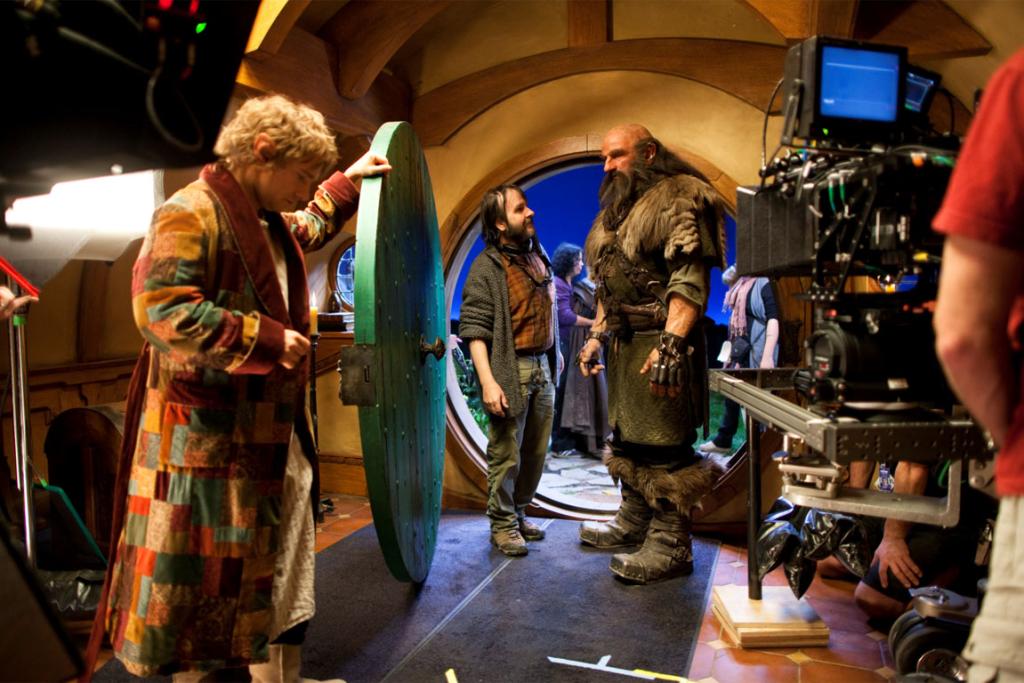
For our film we are making sure that equipment will be secure and any minor stunts are to be done with care and consideration. We will mainly focus the set inside a restaurant or bar area, which will reduce the amount of casualties that are possible and for any outdoor scenes we won’t be within a short range of traffic.
4.2 Explain why copyright is important in the film industry
Copyright law is the legal right and protection given to the authors of ‘’original works of authorship’’. This includes musical, artistic and other creative works, literary and dramatic works. These are often protected through trademarks. CopyRight gives the owner the control over their work and how it is used for over a short period of time.
It was not necessarily created to ensure that creators are able earn money from their works but so that it would act as more of an incentive to create.
However examples of works that are not included in copyright law include titles, slogans, tag lines, ideas, concepts. Procedure, methods, systems, a list of ingredients from any given recipe, familiar symbols and signs and standard information. Other limitations of copyright ownership are for reasons such as educational purposes, libraries and archives and preservation and finally temporary copies.
If I was to use copyrighted material, such as protected music for example, in my short film then that would be known as ‘copyright infringement’. This would only be if I did not fulfill the requirement of asking for the permission to use the music and so I could be fined by the owner. To ask permission you first need to identify the artist, and find the contact information that their music producers or record studio provides on their website. You can also avoid copyright infringement if you look for Fair Use and use caution for anything that is not considered your own work.
Without regard to copyright and permission, you will be asked, at the very least, to take the video down, or in a more extreme case, you may face getting sued for compensation. This happened to Katy Perry during a four-year court battle in which her hit song ‘Dark Horse’ was found to have infringed the 2008 track ‘Joyful’ which belongs to the artist Marcus Gray. It resulted in Perry owing Gray 22.5% of the profits that ‘Dark Horse’ had produced (roughly $2.8 million).
 BFI Film Academy NCFE
[copied across from former draft for reference]
bfiacademysrws says:30th Nov 2019 at 10:44 am
Hi Constance. Great knowledge of copyrighting, something that I’m sure will be essential to understand in your role as Producer. You’ve explained the laws regarding copyright infringement and the practical applications of this within your own short film. How would you go about acquiring the permission to use a certain song, and what might be some problems you face if this is denied?
In terms of your production diary, how did your skills develop over the course of this masterclass, and how will you use this new understanding of camera work to inform the decisions you make as Producer on the shoot day? If you could get this answer updated by Wednesday (04/12) that would be great 🙂
LikeLike